
Northern Utah winters bring snow, freezing temperatures, and occasional warm spells that can create problems for residential roofs. When melting snow refreezes along the roof’s edge, it can form ice dams that trap water and increase the risk of leaks.
Roof heat tape is one way to manage ice buildup, but is it the right solution for every home? Understanding how it works, where it’s most effective, and what causes ice dams can help you protect your roof throughout the winter.
What Is Roof Heat Tape?
Roof heat tape, also called roof heat cable, is an electrical heating product designed to prevent ice from blocking drainage paths along roofs and gutters. Despite the name, it’s typically a flexible cable rather than adhesive tape.
There are two common types of roof heating cable:
- Constant-wattage cable: Produces heat at a consistent rate when powered, according to its design and controls.
- Self-regulating heat cable: Adjusts its heat output in response to surrounding temperatures, helping reduce unnecessary energy consumption.
Both types can help manage ice buildup when properly selected and installed for the roofing application.
How Does Roof Heat Tape Work?
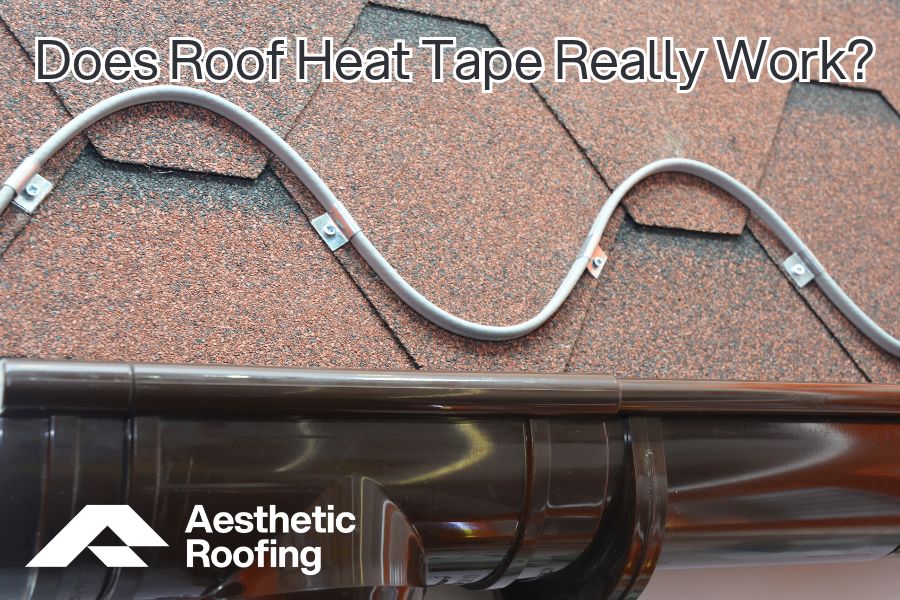
Heat tape for roofs uses electricity to warm specific sections of the roofline. It’s commonly installed in a zigzag pattern along the eaves, where ice dams tend to develop.
As snow and ice melt, the heated cable helps maintain channels that allow water to drain off the roof rather than collecting behind ice buildup. Heat cable for roofs can also extend into gutters and downspouts to help keep those drainage paths open.
However, heat tape only warms the areas immediately around the cable. It doesn’t heat the entire roof or prevent snow from accumulating.
Does Roof Heat Tape Prevent Ice Dams?
Roof heat tape can reduce ice-related drainage problems, but it doesn’t eliminate the underlying conditions that cause ice dams.
Ice dams form when heat from the roof surface melts accumulated snow. The resulting water flows toward colder areas near the eaves, where it refreezes. Over time, this creates a ridge of ice that can trap additional meltwater.
If water backs up beneath the shingles, it may cause damage to the roof decking, insulation, and interior ceilings.
Heat tape for ice dams can help create drainage channels through these frozen areas. However, if your attic is consistently warming the roof, the same conditions may continue causing ice dams throughout the winter.
When Can Roof Heat Tape Be Useful in Northern Utah?
From Salt Lake Valley neighborhoods to higher-elevation communities near the Wasatch Mountains, Northern Utah homeowners experience different snow accumulation and freeze-thaw conditions.
Roof heat tape may be especially useful in areas where ice repeatedly prevents proper drainage.
Roof Edges and Eaves
Eaves often remain colder than the roof sections above heated living spaces. This temperature difference makes them particularly vulnerable to refreezing.
Installing heat cable along problem areas may help prevent thick ice from blocking melting snow.
Roof Valleys and Other Ice-Prone Areas
Roof valleys collect runoff from multiple roof sections and may accumulate substantial snow. In certain roof designs, heating cables can help maintain drainage through areas prone to recurring ice buildup.
Gutters and Downspouts
Frozen gutters and downspouts can prevent melting snow from draining away from your home.
Heat tape for gutters may help keep water moving, but it won’t correct damaged, sagging, or improperly positioned gutters. If your drainage system is deteriorating, professional gutter installation services may offer a more effective long-term solution.
When Heat Tape Isn’t Enough
If ice dams return every winter, the problem may involve more than cold weather. Roof ventilation, insulation, and drainage conditions all influence how snow melts and refreezes.
Poor Attic Ventilation
In a typical vented attic, proper airflow helps prevent excessive heat buildup beneath the roof deck.
When ventilation is inadequate, warmer roof surfaces can melt snow unevenly, contributing to ice dam formation.
Aesthetic Roofing evaluates both intake and exhaust ventilation to help ensure air can circulate properly through the roofing system.
Heat Loss and Insulation Problems
Warm air escaping through gaps in the ceiling or insufficient attic insulation can raise roof deck temperatures.
Improving attic insulation and air sealing may reduce the uneven snowmelt that contributes to ice dams. These improvements can address the cause rather than repeatedly managing ice after it forms.
Roofing and Drainage Problems
Damaged shingles, deteriorated flashing, and inadequate ice-and-water protection can make a roof more vulnerable when water backs up behind ice dams.
If you’ve noticed water stains, damp insulation, or recurring winter leaks, professional roof repair services can help identify and address damaged roofing components.
Is Roof Heat Tape Safe?
Roof heat tape is generally safe when the correct product is installed and used according to manufacturer instructions. However, improper installation or damaged cables can create electrical and fire hazards.
Important safety considerations include:
- Use roof-rated products: Heating cable designed for plumbing pipes isn’t necessarily suitable for roofs or gutters.
- Follow electrical requirements: Use the appropriate electrical protection, connections, and controls specified by the manufacturer.
- Inspect cables regularly: Damaged insulation, exposed wiring, or deteriorated connections require professional attention.
- Avoid improper placement: Cables must be compatible with the roofing material and installed without damaging shingles or other components.
Roof heating systems should also be evaluated periodically to ensure they’re operating safely.
Should You Install Roof Heat Tape Yourself?
Although some roof heat cable products are marketed for DIY installation, working near roof edges creates significant fall hazards, especially during winter.
Proper roof heat tape installation requires evaluating the roof layout, selecting compatible materials, determining cable placement, and providing suitable electrical connections.
Incorrect installation may leave ice-prone areas unprotected or damage roofing materials. A qualified professional can determine whether a heat cable system is appropriate for your home.
How to Reduce Ice Dam Problems Long-Term
Heat tape can be useful in problem areas, but long-term ice dam prevention often requires a broader approach.
Homeowners can reduce recurring ice buildup by:
- Improving attic insulation: Limiting heat transfer from living spaces helps maintain more consistent roof temperatures.
- Sealing attic air leaks: Closing gaps around ceiling penetrations reduces the amount of warm air escaping into the attic.
- Maintaining proper ventilation: Balanced intake and exhaust airflow helps regulate temperatures in vented attics.
- Keeping gutters functional: Clear, properly positioned gutters help direct melting snow away from the roof.
- Maintaining roofing materials: Sound flashing, underlayment, and ice-and-water protection help protect vulnerable areas against moisture intrusion.
If your existing roof has widespread deterioration or inadequate protective components, roof replacement services may provide an opportunity to improve the overall roofing system.
Does Your Roof Need Heat Tape or a Bigger Fix?
An occasional icy roof edge doesn’t necessarily mean your roofing system has a problem. However, repeated ice dams, unusually heavy icicles, and winter leaks deserve closer attention.
Aesthetic Roofing takes a complete-system approach to residential roofing, evaluating shingles, flashing, ice-and-water protection, and ventilation rather than focusing only on visible damage.
As a GAF Master Elite contractor serving Northern Utah, we provide thorough roof inspection services and clear recommendations based on your roof’s actual condition.
If ice buildup has become a recurring concern, schedule an inspection with Aesthetic Roofing to identify potential roofing problems and determine the best next steps.
Frequently Asked Questions About Roof Heat Tape
Does Roof Heat Tape Really Work?
Yes, roof heat tape can help maintain drainage channels through snow and ice, reducing the risk of water collecting behind ice dams. However, it doesn’t eliminate the conditions responsible for ice dam formation, such as excessive attic heat or poor ventilation.
When Should I Turn On Roof Heat Tape?
Roof heat tape is generally most useful during snowy or freezing conditions when meltwater could refreeze along the roofline. The appropriate operating schedule depends on the cable system and manufacturer recommendations. Some systems use automatic temperature and moisture controls.
Can You Put Heat Tape in Gutters and Downspouts?
Yes, heating cables specifically approved for gutters and downspouts can help prevent ice from blocking drainage. Proper placement is important to ensure water has a continuous path away from the roof.
Can Roof Heat Tape Damage Shingles?
Roof heat tape designed for compatible roofing materials shouldn’t damage properly installed shingles when used according to manufacturer instructions. However, incorrect fasteners, incompatible products, or improper installation can damage roofing materials.
Should Roof Heat Tape Stay On All Winter?
Not necessarily. Roof heat tape generally only needs to operate when conditions create a risk of ice buildup. Systems with automatic controls can help regulate operation based on temperature and moisture conditions.
Does Roof Heat Tape Use a Lot of Electricity?
Electricity consumption depends on the cable’s wattage, total length, and operating time. Longer cable runs and constant operation use more electricity, while properly controlled systems may help limit energy consumption.